
AI is changing newborn photography - but perhaps not in the way you might think.
I’ve been photographing newborn babies since 2017, and in that time photography technology has changed enormously. AI is now built into many of the tools professional photographers use, from reducing digital noise and making selections to helping with careful adjustments during editing.
But when you’re photographing a real newborn baby, technology should support the photographer - not replace experience, safety or the things that make each baby unique.
So where is AI genuinely useful in newborn photography, and where do I think we need to draw the line?
AI can help professional newborn photographers with parts of their workflow such as image selection, masking and careful photo editing. It can also be used to generate or alter backgrounds and other elements of an image.
However, AI cannot replace safe newborn posing, professional photography skills or the experience needed to work with newborn babies.
That distinction is important to me.
AI-assisted tools can make some parts of editing considerably more efficient.
For example, modern editing software can identify subjects, create an accurate mask, brighten skin tones and soften skin, while retaining important detail. This can be particularly useful when photographing a larger family group, where I may need to use settings that would otherwise introduce more noise into the photograph.
These tools don't make the creative decisions for me. I still decide how each photograph should look and make the final adjustments myself.
My editing style is deliberately natural. I want your photographs to look polished and finished, but I still want your family to look like your family.
Yes. Generative AI can now replace backgrounds, add objects and even create elements that were never present when a photograph was taken.
It isn't something I routinely use in my newborn galleries.
My style is simple and natural, using neutral colours, soft textures and minimal props, with the focus firmly on your baby and your family.
If you see a tiny bonnet, blanket, basket or little wooden bed in one of my photographs, it was generally there when I took the photograph - not invented afterwards by AI.
I think that distinction matters. These photographs are intended to become part of your family's history, and I want them to represent something that really happened.
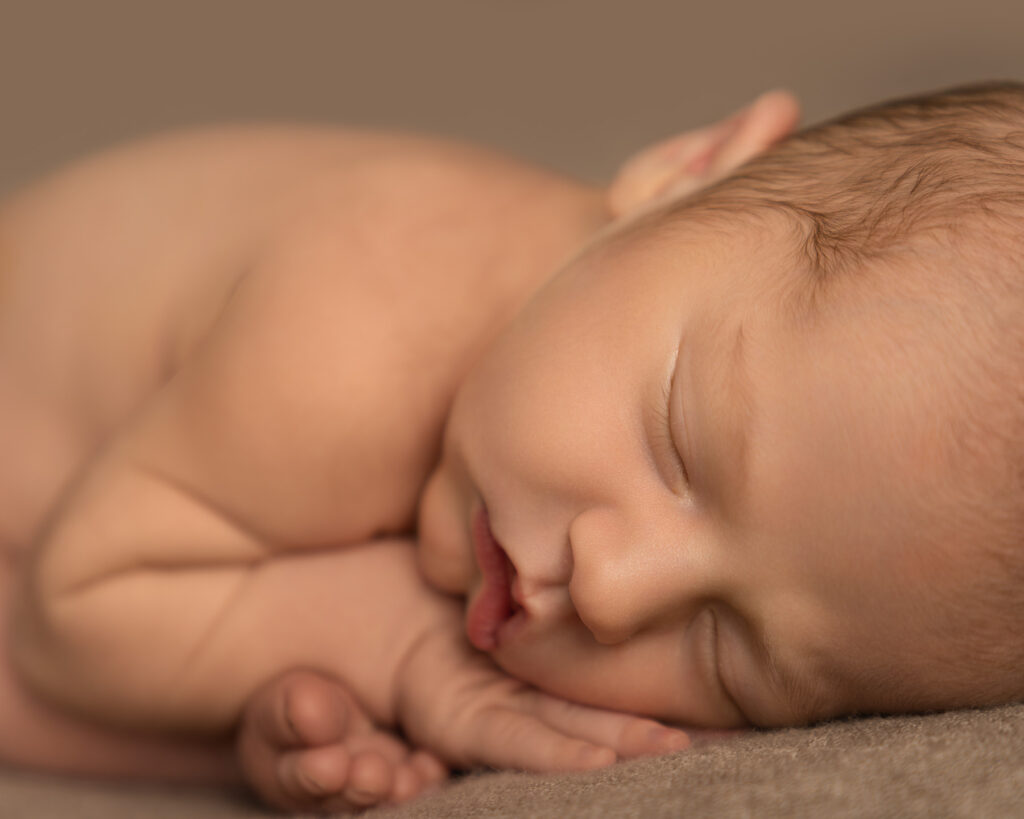
AI may be able to edit a photograph, but it can't safely settle and pose a newborn baby.
Newborn photography is an unregulated industry, which makes choosing an appropriately trained and experienced photographer particularly important.
I have been photographing newborn babies since 2017 and undertake regular specialist newborn safety training and emergency first aid training. My sessions are baby-led, with plenty of time allowed for feeding, changing, cuddles and breaks whenever they are needed.
Knowing when a baby is comfortable, when a pose isn't right for them, or when they simply need to go back to Mum or Dad comes from working with real babies - not software.
No photograph is worth compromising a baby's comfort or safety.
There is an important distinction between using AI-assisted technology to carefully edit a photograph and using generative AI to turn it into something that never existed.
For me, editing should enhance a photograph rather than fundamentally reinvent it.
My aim is still to photograph your baby - their little features, expressions, skin, hair and all the tiny details that make them unique.
I don't want babies to emerge from the editing process looking unnaturally perfect or like dolls.
The finished photographs should still look like the little person who came into my studio.
Technology will continue to change. The cameras and editing software I use in another ten years will almost certainly be more sophisticated than the tools I use today.
But some of the most important parts of newborn photography aren't technological at all.
They're knowing when to wait because a baby needs another feed. Helping an exhausted parent relax in front of the camera. Getting a reluctant older sibling involved. Recognising the little expression that is about to disappear half a second later.
And, sometimes, accepting that the photograph you had planned isn't going to happen and that the unplanned one is actually better.
AI can be a very useful tool.
It isn't the photographer.
Yes. Many professional photographers now use software containing AI-assisted features for tasks such as masking, noise reduction, image selection and editing. How extensively AI is used varies between photographers.
No. My newborn portraits begin with photographs I take of your baby and family during your session. AI-assisted tools may form part of my editing workflow, but my aim is always to preserve a natural and authentic result.
No. Safe newborn posing requires practical training, experience and constant attention to the baby's comfort and wellbeing. AI software cannot replace the photographer's judgement and physical care during a newborn session.
Not often. My photography style is natural and minimal, so I generally photograph real backgrounds, blankets, wraps and props in my studio rather than creating elaborate scenes digitally.
AI can assist photographers with parts of their workflow, but it cannot replace safely handling a newborn, working with parents and siblings, controlling light, creating genuine interactions or capturing fleeting expressions as they happen.
If you're expecting a baby and would prefer natural, timeless photographs without heavy styling or over-editing, you can find full details of my newborn sessions, collections and what to expect on my main newborn photography page.
Newborn sessions take place at my garden studio in Anna Valley, near Andover, with families travelling to me from across Hampshire, Wiltshire and Berkshire.
Every newborn booking also includes an optional complimentary mini maternity photoshoot, so you can capture a little of the story before your baby arrives too.


